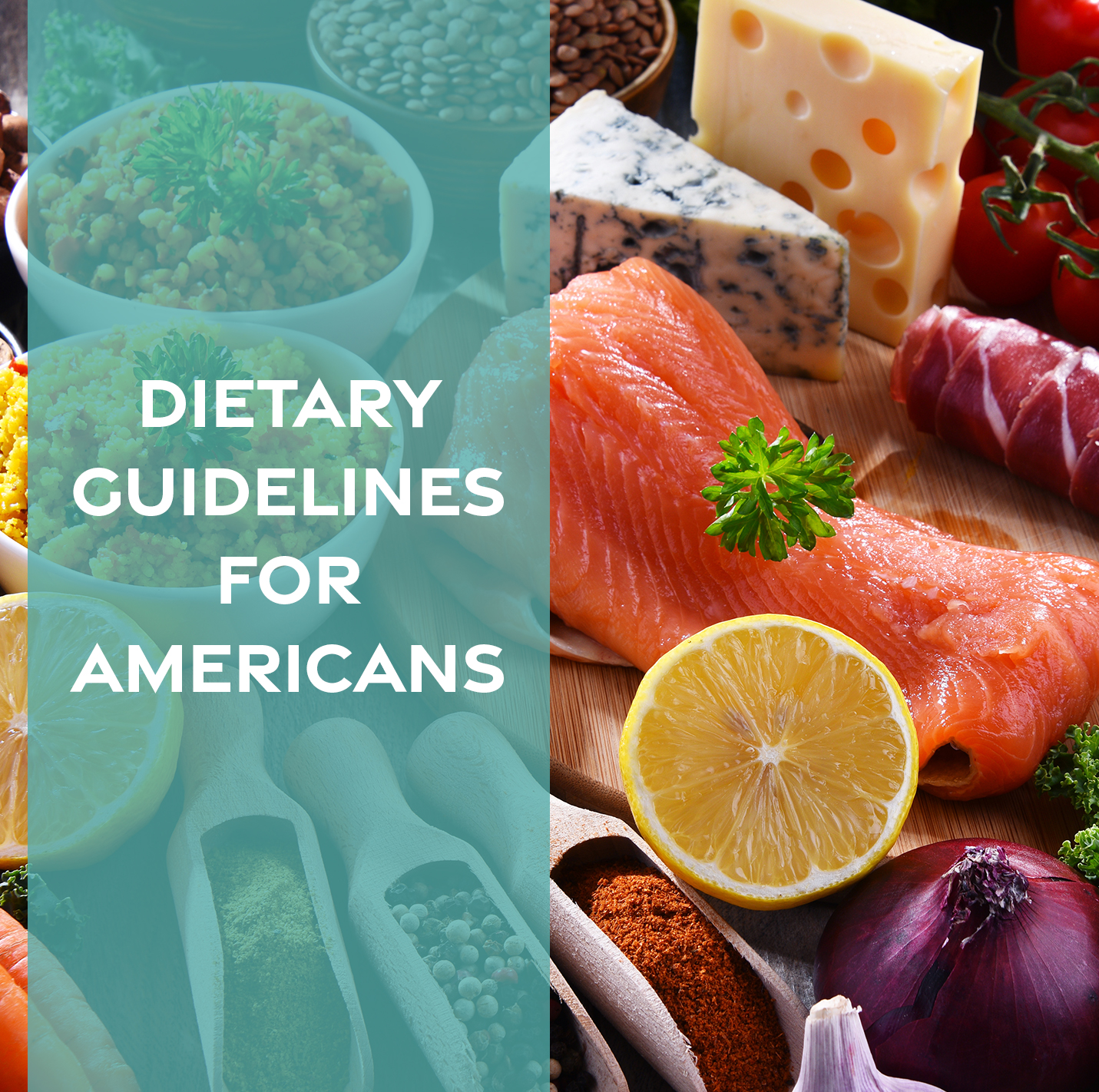
The newly updated Dietary Guidelines for Americans (DGA) have just been released, and yes, we know they tend to stir up A LOT of conversation every time they are released (and honestly, that’s not a bad thing). These guidelines have been around since 1980 and are updated every five years to reflect the latest nutrition research. Their goal? To offer general guidance on eating patterns that support health and help reduce the risk of chronic disease.
The guidelines are developed through a collaboration between the U.S. Departments of Agriculture (USDA) and Health and Human Services (HHS), with support from a committee of independent nutrition experts who review a large body of scientific evidence. The end result is a set of broad recommendations meant to apply to the population as a whole. They are not a one-size-fits-all plan for individuals with different medical histories, lifestyles, cultures, or preferences.
These guidelines influence everything from school lunches and food assistance programs to public health messaging and nutrition education. While they can provide a helpful foundation, we believe they’re best viewed as a starting point rather than a strict rulebook. What healthy eating looks like in real life should (and will) vary from person to person, which is why guidance from a registered dietitian matters.
There’s been a lot of buzz about the new Dietary Guidelines, and we didn’t want to sit this one out. So we are going to take a closer look and break down what the newest update gets right, what still feels confusing, and where we land as a practice.
Key Ways the New Guidelines Differ
The most recent edition, “Dietary Guidelines for Americans 2025–2030,” builds on many familiar themes, like prioritizing fruits and vegetables, and limiting added sugars, sodium, and saturated fats. But there are a few notable shifts worth touching on.
There is a stronger focus on “real” food
The newest guidelines place a bigger emphasis on whole, minimally processed foods as the foundation of a healthy diet. They are also more direct about reducing ultra-processed foods, such as packaged snacks and sugary drinks. This messaging is clearer (and more blunt) than past editions, with a strong “eat real food” slogan.
Protein gets a bigger spotlight
Protein is having a moment in this update. The guidelines now suggest a higher intake of about 1.2-1.6 grams per kilogram of body weight per day, and encourage including protein at each meal. This is a notable increase from earlier guidance, which recommended about 0.8 g/kg.
A broader view of fats and dairy
The updated guidance is more accepting of full-fat dairy products and includes a wider range of fats (e.g., from meats, eggs, nuts, seeds, and oils). Previous editions leaned more heavily toward low-fat and stricter limits on higher-fat foods.
Tighter guidance on added sugars
Added sugars are addressed more firmly this time around. The guidelines emphasize minimizing them as much as possible and introduce a “per-meal_ guidance, rather than focusing only on daily percentages. Earlier versions centered on staying under a certain percent of daily calories and used softer language.
A redesigned visual framework
Earlier guidelines used visuals like MyPlate to represent balanced eating. The latest update shifts to an inverted food pyramid, visually highlighting protein, dairy, fruits, vegetables, and healthy fats, while downplaying grains and refined carbohydrates.
Broader alcohol guidance
Past guidelines gave specific limits for alcohol (such as up to one drink per day for women, two for men). The newest version shifts toward a more general message that less alcohol is better for health, without firm numeric cutoffs.
So…What Did They Get Right?
Let’s be honest, no set of guidelines is perfect, and no single framework can work for everyone. That said, several areas in this update align well with both the science and what we see in practice, working with clients every day.
Continued emphasis on fiber-rich foods
Highlighting fiber from whole grains, fruits, and vegetables is a big win. Fiber supports gut health, blood sugar regulation, heart health, and fullness, yet most Americans still fall short of recommended intakes (25-38 grams of fiber daily). Encouraging fiber from a variety of foods (not just supplements) supports overall health in a practical and sustainable way.
Greater focus on adequate protein
The increased emphasis on protein is another positive step. Adequate protein supports muscle maintenance, metabolism, blood sugar balance, and satiety, especially important for aging adults, active individuals, and those juggling busy, stressful lives. We’re glad to see the focus shift toward spreading protein intake across the day, rather than treating it as something that only matters at dinner.
Clearer guidance on limiting added sugars
Reducing added sugar remains a consistent recommendation, and for good reason. Excess intake is linked to increased risk of chronic disease, energy crashes, and lower overall nutrient intake. We appreciate that the guidelines reinforce that limiting added sugar isn’t about restriction or perfection, but making more room for nourishing, nutrient-dense foods. Importantly, added sugars do not need to be completely avoided, and any foods with added sugar can absolutely have a place in a balanced, healthy diet.
Overall, these recommendations reinforce foundational nutrition principles that are flexible, evidence-based, and adaptable to many eating patterns. This is something we see as essential when guidance is meant for a broad population.
Where We Still Have Concerns
While there’s a lot to like in the new update, there are also areas where we feel the guidance could use more balance, clarity, and real-world practicality.
Narrow framing of “healthy fats”
The guidelines place greater emphasis on fats from sources like butter, beef tallow, full-fat dairy, and meat, while giving less visibility to plant-based fats such as olive oil, nuts, seeds, avocados, and fatty fish. At the same time, they maintain the recommendation to keep saturated fat under 10% of total intake, something that can be challenging in practice when many of the highlighted fats are naturally higher in saturated fat. While these animal-based fats can certainly fit into a balanced diet, we worry this framing may unintentionally minimize fats with stronger evidence for supporting heart health and long-term disease prevention.
The inverted pyramid visual
The new inverted pyramid is a bold visual shift, but we find it difficult to apply it in everyday eating. For many people, it may feel abstract or confusing rather than helpful. Visual tools work best when they translate easily to meals and plates. While MyPlate wasn’t perfect, it offered a simple, accessible way to think about balanced meals. Removing it without a similarly practical replacement may leave people unsure how to build meals in real life.
Fear around grains
The reduced visual emphasis on grains, particularly without clearly distinguishing between refined and whole grains, may unintentionally fuel fear around carbohydrate-rich foods. Whole grains provide fiber, B vitamins, and energy, and for many people, they play an important role in blood sugar balance, digestion, and overall satisfaction with meals.
Broader alcohol guidance
While the “less is better” message aligns with research, the lack of specific boundaries may leave people wondering what moderation actually looks like in practice.
Where We Land
The Dietary Guidelines for Americans aren’t inherently bad. In fact, many of the recommendations are rooted in solid science. Where things often go sideways is in the messaging, especially once guidelines make their way into headlines and social media posts with extreme takes.
At our practice, we believe in moderation over restriction and context over fear. Nutrition should support health, not create anxiety around food. We don’t support fear-mongering, rigid food rules, or labeling entire food groups as “good” or “bad.” Sustainable health is built on balance, flexibility, and consistency, NOT perfection.
It’s also important to remember that these are population-level guidelines. They’re not designed to account for individual medical conditions, metabolic differences, cultural food traditions, or lifestyle factors. What works well for one person may not work well for another, and that nuance often gets lost in broad public recommendations.
As an evidence-based practice, we look at the totality of the research, not just trends or headlines. We don’t believe in extremes. Our approach focuses on helping individuals apply sound nutrition principles in ways that are realistic, personalized, and supportive of long-term well-being.
If you’re feeling confused by the guidelines or unsure how to apply them to your own life, you’re not alone. Nutrition advice can feel overwhelming, especially when it’s meant for the masses. At Absolute Nutrition Counseling, we help you cut through the noise and figure out what actually works for you. Our evidence-based, non-judgmental approach focuses on realistic strategies that fit your body, lifestyle, and goals. If you’re ready for guidance that prioritizes balance over extremes, we’re here to help.
