
By Absolute Nutrition Counseling
As a nutrition counseling practice, we work with a large population of women. From high performing professionals, athletes, women wanting to start a family, and those healing their relationship with food. One pattern we commonly see is a missing period, Amenorrhea.
Sometimes it is brushed off. Sometimes it is blamed on stress. Sometimes it is called “normal” because someone is active or eats “healthy”. But when your period stops, your body is communicating something important.
This is not just about a menstrual cycle, it is about energy, stress, hormones, bone health, heart health, fertility and long-term wellbeing. And that is why we want to talk about Functional Hypothalamic Amenorrhea (FHA).
What is Amenorrhea?
Amenorrhea simply means the absence of menstruation.
- Primary amenorrhea: Someone who has never had a period.
- Secondary amenorrhea: Someone who previously menstruated then stops having a period for 3 months or more.
Functional Hypothalamic Amenorrhea (FHA) is a form of secondary amenorrhea.
Note: Before diagnosing FHA, providers should first rule out any medical conditions such as pregnancy, PCOS, thyroid disorders, hyperprolactinemia, and early menopause.
The Hypothalamus:
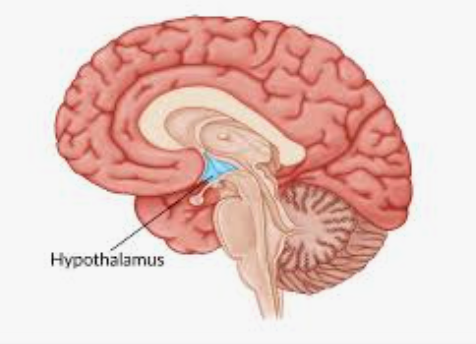
To understand FHA, we have to start in the brain. Think of your hypothalamus as the body’s command center. It regulates temperature, heart rate, hunger cues, stress response, and reproduction. It is constantly receiving feedback from the body and sending signals back out through hormones. When everything feels safe and adequately fueled, reproduction is a “go.” When the body senses stress or low energy availability, the hypothalamus shifts priorities. Survival comes first, reproduction later. And that is where Functional Hypothalamic Amenorrhea comes in.
How Ovulation Normally Works
Ovulation starts in the brain. The hypothalamus releases gonadotropin-releasing hormone (GnRH) in pulses. GnRH tells the pituitary gland to release luteinizing hormone (LH) and follicle-stimulating hormone (FSH). LH and FSH stimulate the ovaries. The ovaries produce estrogen and mature an egg. Ovulation occurs to release an egg. If pregnancy does not happen, hormone levels fall, and menstruation begins.
In FHA, that very first signal (GnRH pulse) is disrupted (slows down or stops), and it has a downstream effect.
No signal → No ovulation → No estrogen surge → No period.
Important note: We often focus on the missing period, but the root issue is that ovulation is not happening.
Why Did My Period Stop?
FHA happens when the body senses stress, whether it is physical, emotional, and/or nutritional. Most commonly, it is a combination of these factors.
1. Low Energy Intake
When energy intake doesn’t meet the body’s needs (whether intentional or unintentional) the body shifts into conservation mode. The brain may be interpreting this as a famine, and survival is the priority. Reproduction requires energy, and if the brain senses there is not enough, it shuts that system down. This tends to happen if you are:
- Eating less than your body needs
- Skipping meals
- Chronically dieting
- Under-fueling for physical activity.
2. Excessive Exercise
Exercise itself is not the problem. But high-intensity or high-volume exercise without adequate fueling creates low energy availability. The body interprets that as stress.
3. Low Body Fat
Body fat is a hormonally active tissue. It plays a role in estrogen production and leptin signaling. When body fat drops too low for YOUR body, reproductive hormones decrease.
Important: This is not about BMI. Someone in a “normal” weight range can still experience FHA because energy availability and hormonal sensitivity are very individualized.
4. Chronic Psychological Stress
Emotional stress alone can suppress the hypothalamus. High cortisol levels communicate to the brain that conditions are not safe for reproduction. Perfectionism, career pressure, relationships, and food anxiety all matter, and these are real psychological stressors.
FHA and Eating Disorders
There is a strong link between FHA and eating disorders, particularly Anorexia nervosa and other restrictive patterns. However, FHA can happen without a formal eating disorder diagnosis.
Many cases occur in individuals who:
- Eat “clean”
- Avoid whole food groups
- Exercise daily
- Appear outwardly healthy
FHA is about energy availability, NOT appearance. That is why FHA is not a weight diagnosis. It’s an energy availability diagnosis.
Why Missing Your Period Is a Big Deal
FHA is way more than just a reproductive issue and missing period. It is a whole-body signal.
Bone Health—Estrogen protects bone density. Research shows that bone loss can begin within 6 months of estrogen deficiency. Prolonged FHA increases risk of osteopenia and osteoporosis, particularly if it occurs during peak bone-building years.
Cardiovascular Health—Low estrogen affects vascular function and cholesterol metabolism. Early markers of cardiovascular disease have been observed in individuals with prolonged hypothalamic suppression.
Fertility and Hormonal Health—Without ovulation, pregnancy cannot happen. Even if pregnancy is not the goal right now, ovulation is a marker of overall health.
Mental Health—Low estrogen influences hormones and neurotransmitters such as serotonin, dopamine, and cortisol. Many individuals with FHA report:
- Increased anxiety
- Mood swings
- Brain fog
- Heightened stress responses
The Role of Nutrition in Recovery
The hopeful part is that FHA is reversible. Nutrition happens to be the foundation of recovery.
1. Increased Energy Intake

Recovery typically requires:
- Eating more calories daily
- Eating consistently throughout the day (meals and snacks)
- Reducing energy deficits (exercise).
Carbohydrates deserve special attention here. They are often demonized, but they directly influence and support Leptin (energy sufficiency hormone), cortisol regulation, thyroid function, and insulin signaling.
Low-carb diets can perpetuate hypothalamic suppression. Recovery almost always requires adequate carbohydrate intake alongside balanced proteins and fats.
2. Restore Body Fat
Some individuals will have to gain weight because some bodies require a higher body fat percentage to menstruate regularly. Genetic set points vary. Recovery often involves weight restoration, and that can be one of the hardest emotional components of the process.
3. Reduce Physiological Stress

Recovery is about signaling safety. This may mean:
- Swapping high-intensity workouts for lower-impact movement
- Adding rest days
- Addressing food rules
- Improving sleep
Why Working with a Registered Dietitian Matters
FHA recovery is way more than just “eat more and relax.” A registered dietitian can:
- Calculate appropriate energy needs for recovery
- Gradually increase intake in a structured way
- Address fear foods and food rigidity
- Support weight restoration and body image concerns compassionately
- Collaborate with medical providers
Increasing intake, reducing exercise, and gaining weight can be physically uncomfortable and emotionally distressing, especially when body image concerns are present.
If FHA is connected to disordered eating, working with a therapist trained in CBT or DBT is highly beneficial. Multidisciplinary care leads to better outcomes.
Final Thoughts
So, if your period has stopped for 3 consecutive months and it is due to stress, exercise, or under-eating, your body is not failing you, but rather it is adapting. FHA is a sign that your body needs more nourishment, rest, and safety. With the right support, restoring your period is possible.
____________________________________________________________________________
References:
Gordon, C. M., et al. (2017). Functional hypothalamic amenorrhea: An Endocrine Society Clinical Practice Guideline. Journal of Clinical Endocrinology & Metabolism, 102(5), 1413–1439.
Cleveland Clinic. Hypothalamic Amenorrhea. https://my.clevelandclinic.org/health/diseases/24431-hypothalamic-amenorrhea
De Souza, M. J., et al. (2014). Female Athlete Triad Coalition Consensus Statement. British Journal of Sports Medicine, 48(4), 289.
Misra, M., & Klibanski, A. (2014). Endocrine consequences of anorexia nervosa. Lancet Diabetes & Endocrinology, 2(7), 581–592.
ABSOLUTE NUTRITION COUNSELING, LLC
